
Included Components & Versions
QForge 0.5.1 build 31 currently includes the following major development components:
| Component | Version |
|---|---|
| QForge | 0.5.1 build 31 |
| crosstool-NG | 1.29.0 |
| GCC / G++ | 16.2.0 |
| GCCGO | 16.2.0 |
| GNU Fortran | 16.2.0 |
| GNU Binutils | 2.47 |
| glibc target runtime | 2.43 |
| LLVM / Clang | 23.1.4 |
| LLD | 23.1.4 |
| Mold | 3.0.0 |
| Go | 1.27.3 |
| Rust | 1.99.1 |
| Cargo | 1.99.1 |
| CMake | 4.4.4 |
| Ninja | 1.13.2 |
| GNU Make | 4.4.1 |
| Autoconf | 2.73 |
| Automake | 1.19 |
| GNU Libtool | 2.6.2 |
| GNU M4 | 1.4.21 |
| Git | 2.56.0 |
| GNU file / libmagic | 5.48 |
| patchelf | 0.19.2 |
| chrpath | 0.18 |
| Node.js | 26.12.1 |
| npm | 11.20.0 |
| Perl | 5.44.0 |
QForge also includes recent builds of:
- Python
- pkgconf / pkg-config
- GNU gettext
- GNU gawk
- GNU grep
- GNU sed
- GNU tar
- gzip
- xz
- bzip2
- zstd
- GNU coreutils
- GNU findutils
- GNU diffutils
- GNU patch
- GNU bison
- GNU flex
- GNU gperf
- GNU texinfo
- ccache
- sccache
- elfutils
- pax-utils
- pyelftools
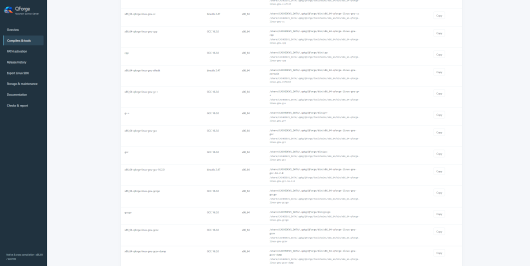
The exact component inventory and versions are also available from the QForge Control Center.
Toolchain Targets
Both QForge cross-toolchains currently use:
GCC       16.2.0
Binutils  2.47
glibc     2.43
ct-ng     1.29.0
Available targets:
x86_64-qforge-linux-gnu
aarch64-qforge-linux-gnu
The complete toolchain includes:
gcc
g++
gccgo
gfortran
ar
as
ld
nm
objcopy
objdump
ranlib
readelf
strip
Check Installed Versions
After connecting to the NAS through SSH:
. /opt/QForge/qforge-env.shYou can check the main versions with:
gcc --version
g++ --version
gccgo --version
gfortran --version
clang --version
ld.lld --version
mold --version
go version
rustc --version
cargo --version
cmake --version
ninja --version
make --version
autoconf --version
automake --version
libtoolize --version
git --version
python3 --version
node --version
npm --version
perl -v
QForge uses its own isolated development environment under:
/opt/QForgeOnce qforge-env.sh has been loaded, QForge tools take priority over the QNAP system utilities for the current SSH session without permanently replacing the NAS system binaries.